
 By journeycn
Zhangjiajie lies in northwest Hunan Province. The Wulingyuan Scenic and Historic Interest Area is a UNESCO World Natural Heritage Site and home to China’s first national forest park. Locals praise it with a classic line: “Three thousand strange peaks, eight hundred graceful streams.” Shaped by millions of years of geological forces, this land features one-of-a-kind quartzite sandstone pillars. Thousands of slender stone spires rise sharply from deep valleys. When mist rolls through the mountains, only the peaks poke above the cloud sea, looking as if they float in mid-air — the original inspiration for the Hallelujah Mountains in the movie Avatar.
The core scenery sits inside Wulingyuan. Yuanjiajie tops every visitor’s list. Here you find Qiankun Pillar (Avatar Hallelujah Mountain) and the Natural First Bridge. Ride the Bailong Elevator, the world’s tallest outdoor sightseeing elevator, and reach the mountain-top viewpoint in seconds to overlook the vast forest of stone pillars. Tianzi Mountain offers sweeping panoramic views. Iconic formations such as Imperial Writing Brush Peaks and Fairy Scattering Flowers have imaginative shapes, and it is one of the best spots for sunrise and sea-of-clouds views. Quiet Golden Whip Stream winds through the shaded canyon with clear running water; wild macaques can often be spotted along this gentle hiking trail. Ten-Mile Gallery is easy-going for all ages. Take the sightseeing tram and enjoy a continuous show of oddly shaped rock walls.
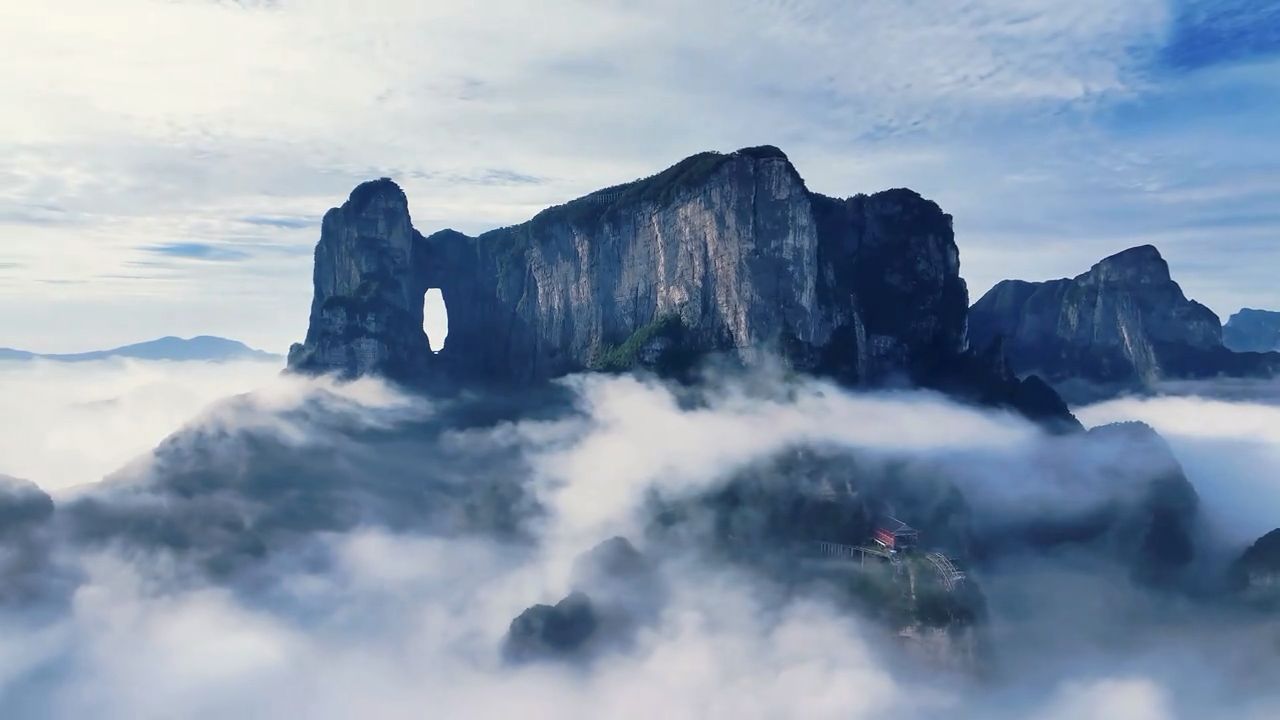
Many travellers also plan a trip to Tianmen Mountain, a separate scenic park famous for Tianmen Cave, a massive natural arch piercing through the mountain. Its thrilling glass skywalk, ultra-long cable car and winding 99-bend Heaven-Linking Road draw adventure lovers. The Zhangjiajie Grand Canyon Glass Bridge, stretching high above the gorge, delivers another unforgettable high-altitude experience.
Zhangjiajie transforms beautifully across seasons. Spring brings wild blossoms among stone pillars. Dense forests keep the valley cool in summer. Mist and clouds appear most often after autumn rains, making it prime season for photographers. In winter, snow dusts the peaks, creating a quiet, ethereal wonderland.
This mountain region has long been home to the Tujia and Miao ethnic groups. Rich western Hunan folk culture, local dishes and traditional performances add warm human charm to the dramatic landscape. A well-connected network of shuttle buses, cableways and boardwalks makes this otherworldly mountain destination accessible to visitors of all fitness levels. Once you stand among these towering pillars, you will see that the floating mountains from science fiction are not only imagined — they are real, right here in Zhangjiajie.